


If you want to get the most out of your game, your wedges deserve just as much attention as your driver or irons. A portion of shots during a round happen within 100 yards, which means your short game can make or break your score. Even on days when your long shots aren’t quite clicking, a reliable wedge game can keep you competitive. A well-played chip or controlled approach can turn a tricky situation into a saved par.
When you’re playing short shots, small differences matter a lot. A well-designed wedge can give you better feedback on contact, help you control distance more precisely, and make tricky shots feel more manageable. Let’s break down the different types, what sets them apart, and what to look for when choosing one.
Different Types of Wedges
If you want consistency and confidence on the green, choose a golf wedge club from top brands like Titleist, TaylorMade, Callaway, Cleveland, Cobra, and Mizuno. These companies have spent years refining their designs, so you’re getting gear that’s carefully engineered for control, spin, and feel.
Having the right golf wedges in your bag can change your experience. Once you get inside that 100-yard range, the game becomes less about power and more about control, touch, and confidence. That’s where these clubs earn their place. When you understand how each one works and when to use it, those tricky approach shots and delicate chips start to feel far more manageable, and your scores tend to reflect that quickly.
Pitching Wedges
Most players begin with the pitching option, which usually comes as part of a standard iron set. It typically sits in the mid-40-degree loft range and is designed to blend seamlessly with your other irons. Because of that, it feels familiar in your hands and is often used for full swings into the green. That said, it’s not limited to longer approaches. Around the green, it can also handle basic chip shots when you want a lower, more controlled rollout.
Gap Wedges
From there, many golfers add a gap golf wedge club to bridge the distance between the pitching option and the next higher-lofted choice. As the name suggests, it fills that awkward yardage space that can otherwise leave you guessing. With a slightly higher loft, usually in the low 50s, it’s useful for a mix of shots like full swings, controlled knockdowns, and even some bunker or greenside work. Some players prefer to match it with their iron set for consistency, while others choose a standalone version that pairs better with their higher-lofted clubs. It often comes down to personal preference and how you like to build your setup.
Sand Wedges
Sitting in the mid-50-degree range, this option is often the go-to for a wide variety of situations. Despite the name, it’s not just for bunkers. It’s equally useful for partial swings, approach shots from inside 70 yards, and delicate shots around the green. Many players rely on it as their all-purpose tool because it offers a balance of height, control, and forgiveness. If you’re only comfortable with one club for your short game, this is often the one that earns that role.
Lob Wedges
At the top end of the loft spectrum sits the lob golf wedge, which is designed for height and precision rather than distance. With lofts pushing toward 60 degrees or more, it’s built to get the ball up quickly and land it softly. This makes it ideal for situations where you don’t have much green to work with, like short-sided shots or when you need to clear an obstacle and stop the ball quickly. It can also be useful out of bunkers or for those delicate 30 to 50-yard shots where you need control. That said, it’s not the easiest club to master. Because of the high loft and how it interacts with the turf, it demands a bit more skill and confidence. For newer or higher-handicap players, it can sometimes feel less forgiving.
Putting together the right combination comes down to how you play and what distances you face most often. Some golfers prefer a simple setup with just a couple of options, while others like having more variety to fine-tune their yardages. Either way, look for reliable tools for those scoring shots where precision matters most.
How Many Golf Wedges Should I Carry?
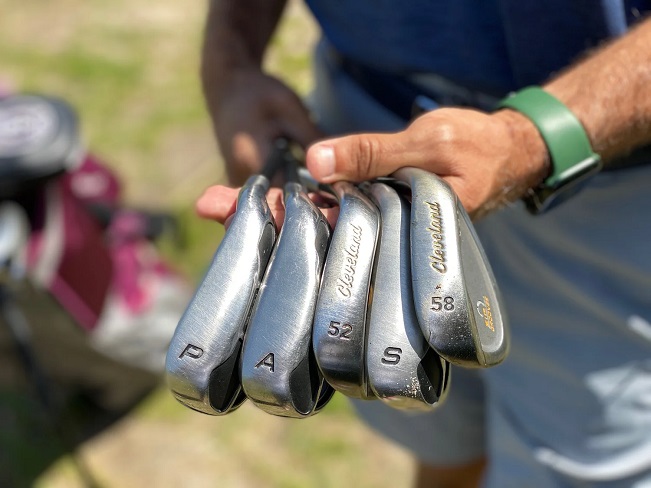
Once you understand the different golf club wedges, the next question is how many you need in your bag. The answer depends on your skill level and how much control you want over those scoring shots. If you’re just starting, aim to keep things simple. A pitching option paired with a sand club will cover most situations you’ll face, from basic approach shots to bunker play and those awkward distances just off the green. It’s a straightforward setup that lets you focus on building confidence without overcomplicating things.
As your game develops, add a third club. Space the lofts evenly to remove those frustrating distance gaps and get more reliable options when you’re between yardages. This is where many golfers start to feel more precise, especially on approach shots that demand a bit more control. More experienced players sometimes go a step further and carry four. This setup allows for tighter spacing between lofts, which helps you fine-tune distances and play a wider variety of partial shots.
No matter how many you carry, the key is learning your distances. Spend time practicing different swing lengths with each club so you can handle those in-between shots with much more confidence.