


Many educators are trying hard to bridge the gap between students and the material. Using games in the classroom is one way to help make education more approachable and exciting for everyone. The reason for that is simple: play is a child’s learning superpower.
It helps them learn in a way that’s natural to them. So, it makes perfect sense to incorporate games in the classroom, especially for teaching intimidating subjects like math.
What Are Some Good Math Games to Play?
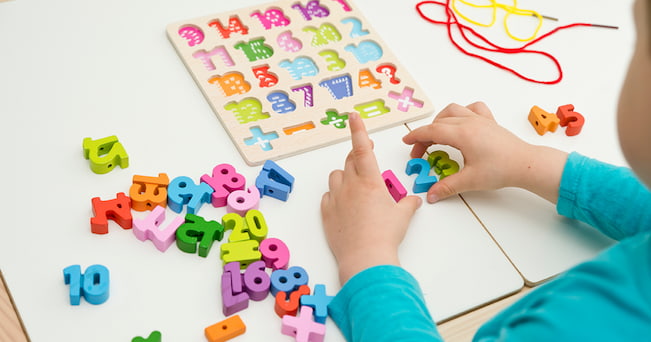
Nowadays, there’s a vast selection of fun and engaging math games for kids, from timeless choices like number puzzles and flashcards to modern games that combine movement, collaboration, and hands-on learning.
Newer approaches often encourage students to work together and participate in the learning process. Some popular examples include math scavenger hunts, classroom escape-room challenges, STEM building activities, and task-based learning stations.
Both classic and newer math games for kids can be the perfect addition to your lesson plan when chosen with your students’ age and interests in mind.
How to Choose Educational Games for Students?
Age
When it comes to choosing the right tools to support math learning, age is often the first thing to consider. Preschool and early primary school children are naturally curious, enjoy repetition, and often need to physically manipulate objects before they can understand mathematical ideas. They’ll learn math most effectively when it’s hands-on, visual, playful, and connected to real-world experiences.
To help them grasp key mathematical concepts, you can use counting games with blocks, counters, or everyday objects. These can help children connect numbers to quantities. Next, sorting activities can encourage them to group items by colour, shape, or size.
Simple board games with dice can support counting and number recognition, while shape hunts and construction challenges introduce geometry and spatial awareness.
Students in Years 3 to 6 are usually ready for more structured challenges that introduce problem-solving, multiplication, division, fractions, and logical thinking through games that still feel playful but require deeper reasoning. Some games you can introduce in the classroom to reinforce math skills are multiplication bingo, math scavenger hunts, Sudoku, card games, and strategy board games.
Topic
The topic you’re teaching also plays an important role in selecting the right math games for kids. For instance, to support teaching addition and subtraction, include games that involve number bonds, dice rolling, or simple trading activities. For fractions, use sharing games with shapes, food, or counters.
To make statistics and probability easier to understand, use dice games, simple surveys, and graphing activities. Geometry and measurement learning, on the other hand, can be supported with hands-on games like shape bingo, tangram puzzles, pattern block challenges, and measuring scavenger hunts around the classroom.
Interests
Next, students themselves can offer valuable clues about what will work in the classroom. Their level of engagement, energy, and natural interests can guide your choices beyond the set plan.
Some students respond better to competitive games. Others may prefer cooperative group tasks or quiet, individual activities. Observing how students interact with different games can help you refine your approach and choose educational resources that connect with them.
Where Australian Schools Can Find Maths Games
Australian schools and educators have plenty of options when it comes to sourcing maths games for the classroom. Educational suppliers are often the first stop, offering everything from counting games and number activities to multiplication, fraction, and problem-solving resources that support the Australian Curriculum. Many suppliers also organise resources by year level, making it easier to find age-appropriate options.
Next, online teaching stores are another popular choice. These platforms provide printable maths games, task cards, board games, and classroom activities that can be downloaded and used straight away. They can be a practical option for teachers looking for flexible resources that suit different learning levels and classroom needs.
Teachers can also find maths games through specialist classroom resource providers. These suppliers often focus on hands-on learning, offering manipulatives, STEM resources, and educational game kits that encourage active participation and collaborative learning.
What to Consider Before Buying
Before purchasing math learning games, it’s important to consider how they will be used in the classroom. Some activities work best for whole-class instruction, while others are better suited to small groups, learning centres, or independent practice. Durability, ease of setup, and the ability to reuse the resources across multiple year levels can also influence value for money.
Speaking of value for money, many schools turn to wholesale suppliers for better pricing on bulk orders. This means schools can buy classroom resources in larger quantities at reduced costs, making it more affordable to equip multiple classes or year levels.
Wholesale options are especially useful when schools need consistent, curriculum-aligned materials such as maths games, manipulatives, or learning kits. Many suppliers also offer tiered pricing, bundle deals, and education-specific discounts.
In some cases, they provide carefully curated resources designed for different year levels, helping teachers choose appropriate tools while staying within budget. This approach allows schools to maximise resources while maintaining quality and consistency across the classroom.