


Open a fresh Moleskine notebook, and you will understand where the obsession comes from. The smooth, ivory pages, the elastic band snapping into place, the small pocket sewn into the back cover. None of these elements is an accident of design – they are the result of a carefully crafted product. One that has turned ordinary paper into a legend. What is it about these notebooks that keeps people coming back decade after decade? How did a simple paper product become a lifestyle object for writers, artists, architects, and thinkers of the world?
The Backstory
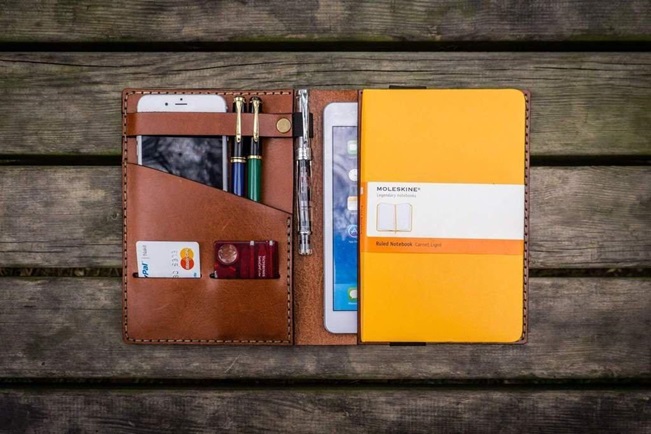
Unlike most stories, the tale of this notebook does not start in an elegant design studio in Milan, but in humble French bookstores and stationery shops, where a nameless black notebook was made for nearly two centuries. That notebook was known as the famous carnet, believed to be the choice of Vincent van Gogh, Pablo Picasso, and Ernest Hemingway. When the last Parisian manufacturer closed in 1986, the notebook seemed destined for obscurity.
But in 1997, the notebook was reborn when Modo & Modo, a Milan-based company, relaunched the product under the name “Moleskine.” According to a story recounted by Bruce Chatwin in his memoir titled The Songlines, he described his own black notebook as a “moleskine.”
The Feel That Makes the Difference
Open a Moleskine Classic for the first time, and you’ll notice it immediately. Weighing in at an impressive 70gsm, the paper has a certain thickness, smoothness, and composition that ordinary notepads just can’t match. The ink from fountain pens doesn’t bleed, the ballpoint writes effortlessly without leaving scratches, and the pencil glides perfectly across its surface. None of these qualities comes by chance.
The rounded corners, the stitched binding that lets the book lie perfectly flat when opened, and the little pocket in the inside cover – all add up to deliberate design choices made with a purpose in mind.
The “Moleskine Effect”
This intriguing effect is well studied and documented in both productivity and creativity circles. It refers to the idea that the mere act of using a beautiful, high-quality notebook affects the quality and tone of the writing it contains. The simple truth of the matter is that when you feel the pages deserve your best work, you’re more thoughtful, more careful about what you write.
Psychologically speaking, this can be explained as priming the environment. The physical quality of the object signals importance to the brain. A cheap spiral-bound pad invites careless scribbling; an exquisite Moleskine notebook invites intention. Writers have admitted to being much more mindful of self-editing and fleshing out their ideas when using the higher-quality notebook.
There’s also the ritual aspect. Simply opening the notebook and uncapping the pen is a symbolic act of moving away from the chaos of our daily lives and into the calm and collected world of ideas.
The Range
The Classic notebook comes in many forms – hardcover or soft cover, compact or large sizes, lined, blank, dot grid, or square. This covers some of what the brand makes, but not nearly enough.
Then there is the Moleskine journal, structurally similar to the classics but meant for everyday use. A wider line spacing, additional pages, just right for those committed to putting pen to paper each day.
For visual creatives, the Art Collection is where things get serious. These sketchbooks use 165gsm heavyweight paper that can handle watercolour washes, ink washes, and pencil layering without curling up or bleeding through. In the case of the watercolour sketchbook, you’ll find a quality 200gsm cold-press paper. For artists who have kept years’ worth of sketchbooks, the intentionality felt in using a Moleskine sketchbook that lasts rather than falling apart on page thirty cannot be overstated.
Other products include the Volant (the flexible, minimalist journal), the Moleskine Weekly Planners (favoured by analogue productivity enthusiasts), and limited edition collaborations with artists, films, institutions, and cultural moments.
The Value
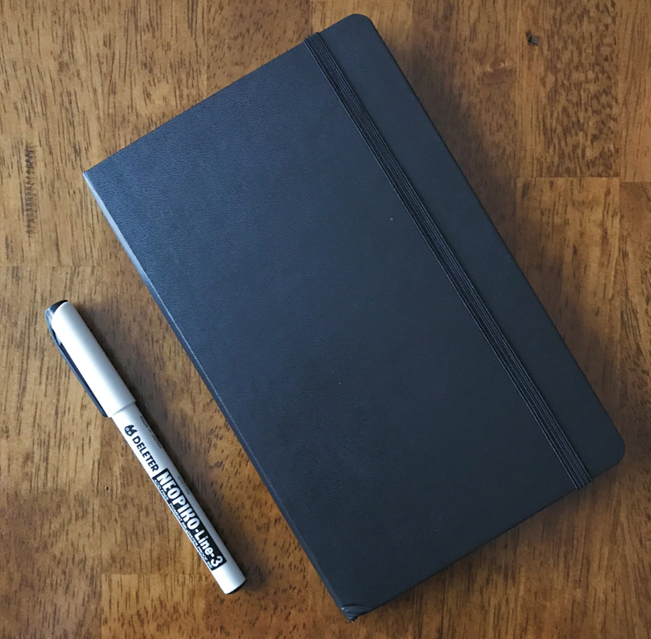
While a high-quality Moleskine notebook is more expensive compared to other notebooks, it is an investment that justifies itself.
- Longevity: These notebooks are made to last. The paper does not fade, the covers can withstand years of storage inside various bags and pockets, and the binding is durable. Notes made in these notebooks ten years ago still look clear and undamaged.
- Consistency: Knowing that you can rely on the paper quality in every notebook allows you to plan your work around it. Illustrators and writers appreciate this predictability in any task that needs to be performed.
- The psychological effect: Investing in a nice notebook makes a powerful statement: it is a small but meaningful commitment to the idea that your ideas, your plans, and your creativity deserve only the best. In a world obsessed with speed and disposability, getting yourself a premium notebook is almost like making a statement against those notions: some things are worth being done with great care and precision.
The Bottomline
Yes, you can take notes on your phone. Yes, tablets with styluses exist. Yes, AI can transcribe your voice in real time. None of this has replaced the act of writing by hand for people who’ve discovered what that act actually does for thinking. It slows you down just enough. It forces compression, selection, translation of thought into mark. The screen gives you everything; the page asks you to choose.