


Be it exploring a cave, hiking up a mountain, diving or spending the weekend camping in the wild, these activities require you to have a plan B. When things go wrong and you need help to get out of danger and to get home safely, a PLB is what you need.
Personal locator beacons are handheld devices that can transmit data on your location to a worldwide SAR (search and rescue) network via satellites. The distress signal tells the nearest rescue team who you are, the help you need and where you are. All you need to do is find a locator beacon that meets PLB standards and use it properly when needed.
What Matters in a PLB
AIS
If you’re going to use a PLB on water, you should invest in one that has AIS, meaning it works with the automatic identification system. This means the PLB can communicate with other vessels nearby, as well as shore-based stations, to get you the help you need. An AIS personal rescue beacon is much more effective at sending out a distress signal, as it does so to more people.
Battery Life
While they don’t have rechargeable batteries, most personal locator beacons come with lithium ones nowadays. This means they have excellent battery life, and that the battery is only being used when you turn on the device. A class 2 battery is mandatory on all PLBS, meaning the device can send a signal at -29°C for 24 hours. In less aggressive temperatures, a PLB transmit for more than 30 hours.
RLS
Return Link Service is a feature that lets you know that your distress signal and location have been received by someone. A PLB with this feature is definitely more reassuring to have than one without it. You’ll know when your message has been received when a blue coloured light on the device starts flashing.
Registration
It’s important that once you get your PLB, you register it in the SARSAT (Search and Rescue Satellite Aided Tracking) database. This is done free of charge, and it’s a must as it links your PLB to your information; rescue teams know vital info when they come to save you.
How to Use a PLB
1. Using a PLB isn’t complicated at all, but you need to follow a certain step-by-step process. First, you need to gain access to the activation button by sliding down the red protective cover. Once you gain access to the button, release the antenna and make sure you have it set to a vertical position.
2. With the antenna set up properly, go ahead and press the red button until you see a green light starting to flash. Once you see the light, release the button and place the device in a clear area where the antenna has an uninterrupted line to the sky.
3. Make sure you use your PLB in a real emergency, where imminent danger is present, as otherwise, fines will be applied if you fail to use the device for its intended purpose. It’s best to leave the beacon operating until you are rescued.
Do’s & Don’ts
Do
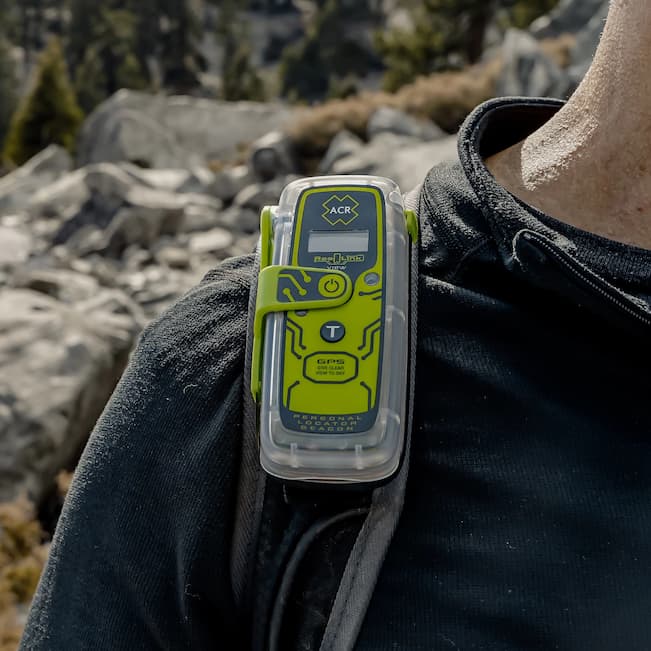
Placing your PLB is best done on a life jacket, in dedicated pockets, bumbags, pouches and side-packs, and with bands, clips or carabiners. You can also have them placed on your backpack; make sure it sits higher up.
Don’t
What you shouldn’t do is sit and rest on the backpack with the PLB on or in it, or lean against a wall or tree with the PLB in a pouch on your belt line. Make sure not to cram the device with other items or put pressure on it while carrying it, as you can damage the antenna. Don’t hold the PLB by the antenna or operate it without the antenna being fully deployed.
Advantages of Using a PLB
Coverage
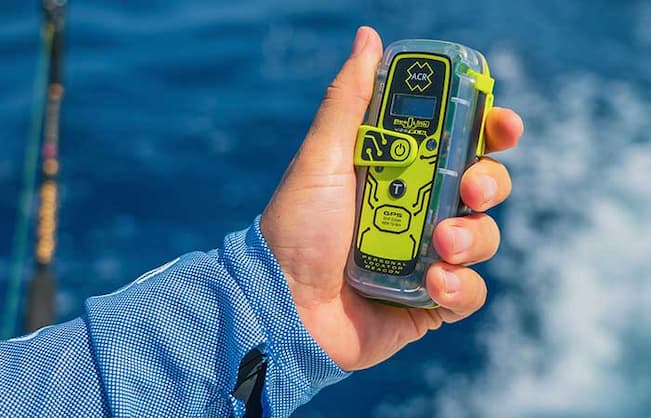
Relying on a personal emergency beacon means you get the ultimate level of coverage as the device communicates with satellites and locates you wherever you are in the world. No other GPS-enabled device does so and lets others know of your location.
Battery Life
Since its battery stays dormant until you press the red button, a PLB gives you the best chances of survival as it can send out your information for the longest time out of any other similar device.
Accuracy
Another reason a PLB is your best bet at surviving a dire situation is its accuracy, as the satellites it’s able to communicate with allow your rescuers to pinpoint your exact location to only a difference of 10 metres or less.
Usability
PLBs are made so that they are extremely easy to use, meaning that no matter if you’ve used one before or it’s your first time using a PLB, you can figure out exactly what to do, even if you’re not 100%.
Reliability
The simplicity of PLBs makes them the most reliable solution when it comes to sending a distress signal, and so does their rugged construction. That doesn’t mean you should be careless when handling one, though.
Cospas-Sarsat
The satellite database mentioned above has been designed to communicate with emergency devices such as PLBs, which makes them the most useful when it comes to saving your life. The frequencies and types of satellites Cospas-Sarsat uses are meant to be the most reliable network for emergencies across the world.