


Ever had a hair tie give up halfway through a double shift while your hands were full? A good scrub hat fixes that problem, but with so many styles, fabrics and prints on the market, picking one can feel like guesswork.
If you’ve struggled with finding comfortable and breathable scrub hats in Australia, the details below will help you sort the good from the average. They cover hair coverage, mask buttons, wash temperatures and price, so you know what to check before you order.
Why Scrub Hats in Australia Matter in Healthcare Settings

By hour six of a shift, hair sheds, sweat builds under theatre lights and mask loops tug at your ears. A hat deals with all three. That’s why it counts as standard kit for infection control and comfort.
Infection Control and Hair Containment
Hair and scalp shed particles all day, and sterile areas like theatres and procedure rooms have little room for that. Full coverage is the standard there, so tuck in every strand, including the nape and sideburns. Australian guidance, including the NHMRC infection control guidelines and ACORN standards, supports covering hair in perioperative settings.
Where Scrub Hats Are Worn Beyond the Operating Theatre
Theatre staff aren’t the only ones who wear them. You’ll see hats on wards, in emergency, ICU and day surgery, and in dental surgeries and orthodontic clinics. Vet teams wear them in animal theatres, and many community nurses, aged care staff and allied health workers wear one to keep hair off their face during patient care.
What Facility Policies Usually Say
Hospitals and state health departments set their own rules on hat style and colour, so check with your manager before you buy. Many facilities hand out disposable hats for staff. Plenty of people still buy reusable cotton hats for personal use, as long as their unit allows them.
Scrub Hat Styles Explained
The right style depends on your hair length, your role and how you like a hat to feel. Go through these five options and you’ll narrow your choice quickly.
Tie-Back Scrub Caps in Australia
Tie-back scrub caps have an elastic back and a tie you can adjust. They suit long hair, buns and ponytails. Pull the tie tighter for fine hair or loosen it for thick hair. If you wear your hair up on shift, try this style first.
Bouffant Caps
Bouffant caps have a fuller shape with extra room for thick or long hair. You’ll find most of them as disposable caps, and reusable fabric versions are less common. People with a lot of hair or braids who want space around the crown tend to like them.
Surgical Skull Caps
Surgical skull caps fit close over the crown and usually have a sweatband. They suit short hair and shaved heads, and they give you a low profile under a surgical hood or loupes. If your hair is longer than your collar, a skull cap won’t cover it all, so pick a tie-back instead.
Hijab and Religious Headwear for Clinical Settings
Polyester at around 125gsm suits hijab-style scrub hats because it has good grip and resists slipping. Test yours before a shift. Bend over, turn your head quickly and brush the fabric against a lanyard to check for slippage and snags. A snug hat matters when you move fast in sterile areas. Match the colour to your facility’s uniform policy.
Plain Versus Printed Scrub Hats
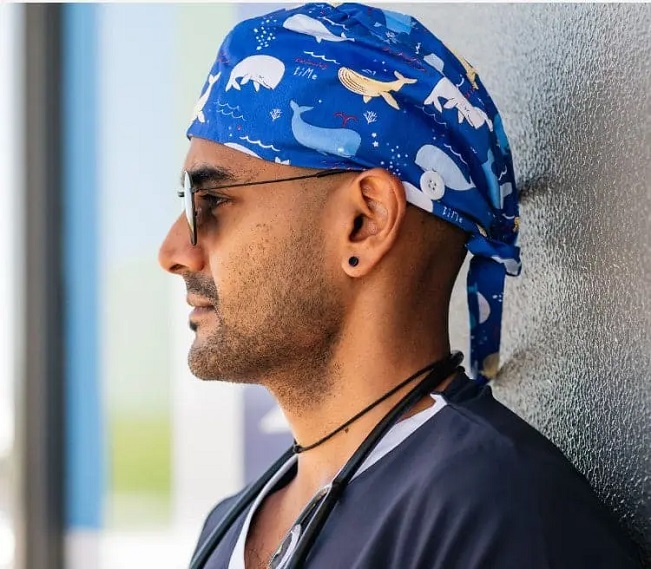
Plain colours suit corporate settings and theatres with set uniforms. Printed hats work well for paediatrics, maternity, dental and vet teams, where a friendlier look helps nervous patients relax. Animals, florals and patterns are the common themes. Pair a printed hat with plain scrub tops, or a plain hat with printed tops, so your outfit doesn’t look busy.
Fabric, Fit and Features That Matter on a Long Shift
A hat that feels fine at hour one can annoy you by hour ten. The details below decide which one you reach for. Check each of them before you buy.
Cotton Versus Polyester Blends
100% cotton is soft, breathable and good at absorbing sweat, which is why most people choose it for long shifts. Expect some shrinkage and fading over time. Polyester suits you better if you want quick-dry fabric, wrinkle resistance or a non-slip hijab style.
Sweatbands and Forehead Comfort
A sweat-absorbent band soaks up moisture under theatre lights and during physical tasks like lifting or repositioning patients. A soft band also cuts down on skin irritation and headband marks. If you get red lines across your forehead by the end of a shift, look for a wider, softer band.
Buttons for Mask Loops
Wearing a mask for hours puts constant pull on your ears. Side buttons let you hook the mask loops over them, which takes the weight off your ears. Theatre, dental, respiratory and infectious disease staff gain the most from this feature.
One-Size Fit and Adjustability
Elastic and a tie let one size suit most heads and hairstyles. For thick, curly or long hair, locs and braids, loosen the tie and gather your hair low before you put the hat on. For short hair and shaved heads, tighten the tie so the hat doesn’t ride up. Measure around your head just above your eyebrows. Most adults fall between 54 cm and 60 cm, so compare that to the size range on the product page.
Choosing by Hair Type and Length
Long hair or a bun suits a tie-back cap, and you should gather your hair at the nape first. Thick, curly hair, locs and braids suit a tie-back with a loose tie or a bouffant for extra room. Short hair and shaved heads suit a skull cap or a snug tie-back. If you cover your hair for faith reasons, go for a non-slip polyester hijab style.
How to Care for Scrub Hats So They Last
Hats take a lot of sweat and a lot of washing. A few habits add months to their life and keep the colours bright.
Washing and Laundering
Wash cotton hats at home at 40°C with regular detergent, and check the care label before you go hotter. Dry them on low heat or hang them up. Hospital laundries follow AS/NZS 4146, which sets hot-wash and disinfection standards that a home machine can’t match. After a contaminated shift, wash your hat separately from other clothes.
Protecting Prints and Colours
Turn your hat inside out before washing and skip harsh bleach, which strips colour fast. Dark prints fade first, so wash them with similar colours. Air drying protects the print and the elastic better than tumble drying, and it limits shrinkage.
How Many Hats to Own
Own one hat per shift plus spares for the week. If you work four shifts a week, five or six hats means you always have a clean one while the others are in the wash. Replace a hat when the elastic stretches, the fabric thins or the sweatband fades and goes stiff.
Everyday Wearing Habits
Change your hat during a shift if it gets soiled, soaked with sweat or splashed. Check your workplace policy before you wear one outside, as many facilities ask staff to take it off when they leave. Store clean hats flat or folded in a dry drawer or a zip bag, away from damp bags and shoes.
Buying Scrub Hats in Australia: What to Check Before You Order
Once you know your style and fabric, a few practical checks will do the rest. They cover cost, matching, team orders and delivery.
Matching Your Hat to Your Scrubs
Pair a plain hat with printed scrub tops or a printed hat with plain tops and scrub pants, and check ward or department colour rules first. Browse the scrub caps and hats collection next to the printed scrub tops so you can compare colours on one screen. A printed hat also suits a nursing graduate or new starter as a gift.
Group Orders, Embroidery and Printing
For team orders, you can add names, roles or department logos through embroidery and printing. Ask about minimum quantities and setup before you commit, since they differ between suppliers. Matching hats help a clinic or practice look consistent in front of patients.
Delivery, Returns and Local Supply
Check the flat-rate delivery cost and estimated times for your postcode, and allow a few extra days for regional areas. Hats are hygiene items, so confirm the returns policy before you order, as many suppliers won’t accept opened ones. An Australian supplier gives you sizing that suits local staff, faster turnaround and support in your own time zone.